


Understanding the Benefits of Different Apartment Floor Plans
Choosing between a studio and a one-bedroom apartment comes down to how you actually live, not how you imagine you might. Studios work best for solo renters who keep things simple and spend more time out than in. One-bedrooms serve remote workers, people who host guests, and anyone who needs a real boundary between sleeping and living. This guide walks through the practical differences so you can make the call before you sign.
Studios and one-bedrooms solve different problems. The studio trades square footage for a lower monthly cost and a clean, open aesthetic. The one-bedroom trades that cost savings for a door, which sounds minor until you’re on a video call at 7am or you need somewhere to put a friend who’s staying the weekend. The right choice isn’t the cheaper one or the bigger one. It’s the one that fits the way you actually use a home.
Most people walk into this decision thinking it’s mostly about price. Studios are cheaper, one-bedrooms cost more, done. But spend a few minutes thinking through your actual week and the picture gets more complicated in ways worth sorting out before you sign anything.
Studio apartments are built around the idea of one open, connected space. Done well, that openness feels intentional and modern. It rewards people who keep things simple, who don’t accumulate a lot, and who honestly aren’t home all that much. A well-designed studio in a community like Sinclair at Palm
Pointe doesn’t feel cramped. It feels edited.
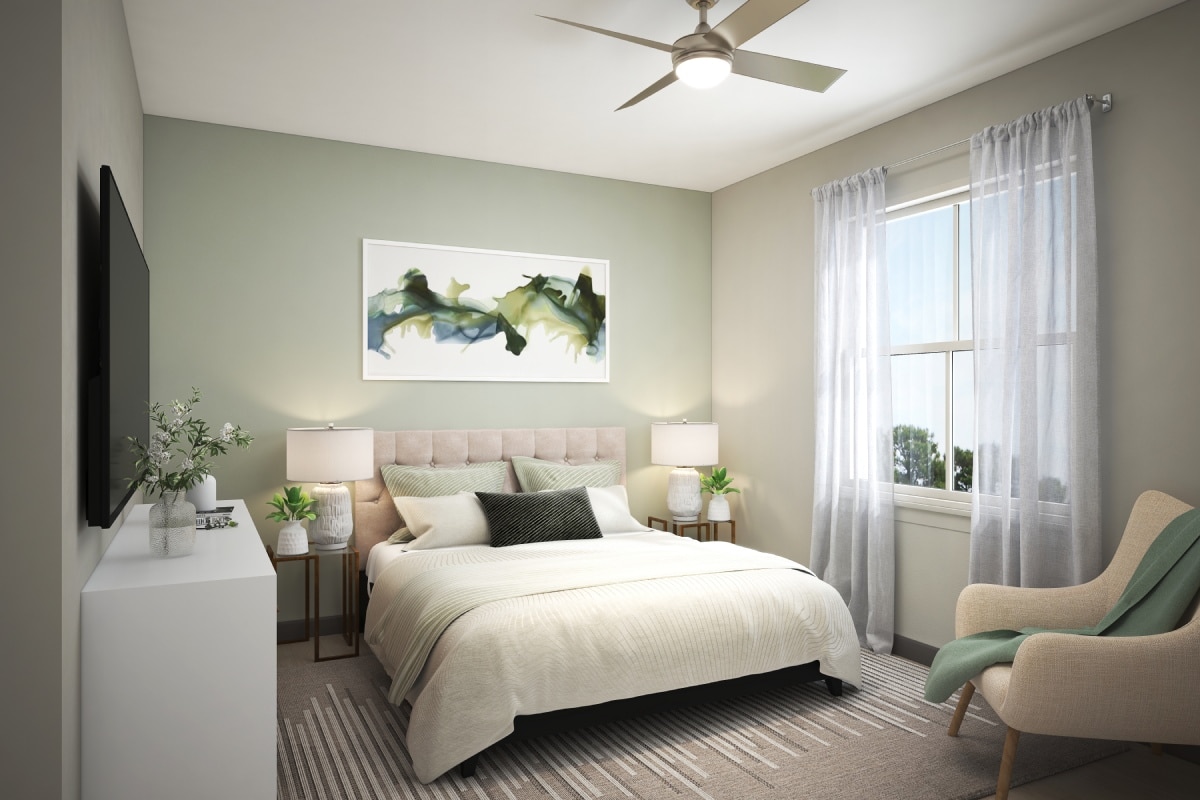
A one-bedroom gives you a door. That sounds minor until it’s 7am on a Monday and you need to be on a call before your brain has fully started, or until a friend stays over and you both want some actual privacy. The separation between bedroom and living space is a psychological thing as much as a physical one. Your sleeping space stays a sleeping space. For a lot of people, that structure is what makes an apartment feel like a real home.
Studio vs. One-Bedroom: A Side-by-Side Comparison
The table below captures the key differences across the factors that tend to actually move the needle for Fort Myers renters.
| Factor | Studio | One-Bedroom |
| Monthly Cost | Lower rent, easier on budget | Higher rent, more space for the spend |
| Work From Home | Challenging without separation | Bedroom door = meaningful boundary |
| Storage | Limited, requires minimalist habits | More closet space and room to breathe |
| Guests | Awkward for overnight visitors | Natural separation for host and guest |
| Best Fit | Solo renters who travel or go out often | Remote workers, couples, those with more gear |
| Feel | Sleek and edited when done well | Homier, more structured daily rhythm |
| Amenity Offset | Coworking lounge can compensate for work | Less reliance on shared spaces for function |
Which Apartment Layout Fits Your Lifestyle, Work Habits, and Storage Needs
The most useful way to approach this decision is to stop thinking about square footage and start thinking about your actual Tuesday. What does a regular weekday look like? Where does work happen? How much stuff do you own? Do people come over, and does it matter when they do?
Your daily habits are the only reliable guide here. Remote workers who need a real door to close during calls almost always benefit from a one-bedroom. Renters who travel frequently, go out most evenings, and own relatively little will find a studio gives them everything they need at a lower monthly cost. Getting honest about which description fits you better makes the rest of the decision straightforward.
Here are the factors that tend to actually move the needle:
- Whether you work from home regularly and need a space that doesn’t make every call feel like it’s happening from your bedroom
- How you feel about open-concept living when you’ve had a long day and just want some quiet separation
- How much gear, clothing, or equipment you have and whether a studio’s storage situation can realistically handle it
- Whether you host guests with any regularity and what the experience looks like in each layout
- What your budget actually allows and whether the extra cost of a one-bedroom is worth it for the way you’ll use the space
Someone who travels frequently for work, spends most evenings out, and prefers a streamlined living situation will probably feel right in a studio. Someone who works from home three days a week, has a closet full of things they actually use, or just needs room to breathe will find the one-bedroom worth the extra cost. The people who end up frustrated with a studio are usually the ones who convinced themselves they’d live more minimally than they actually do.
Tips for Choosing the Perfect Apartment Size for Your Needs
One piece of advice that sounds obvious but rarely gets used: think honestly about how much time you spend inside your apartment versus outside of it. If you’re mostly home because you work there, cook there, and decompress there, layout matters a lot. If you’re out most of the time and home is mostly where you sleep, a studio will serve you well and save you real money every month.
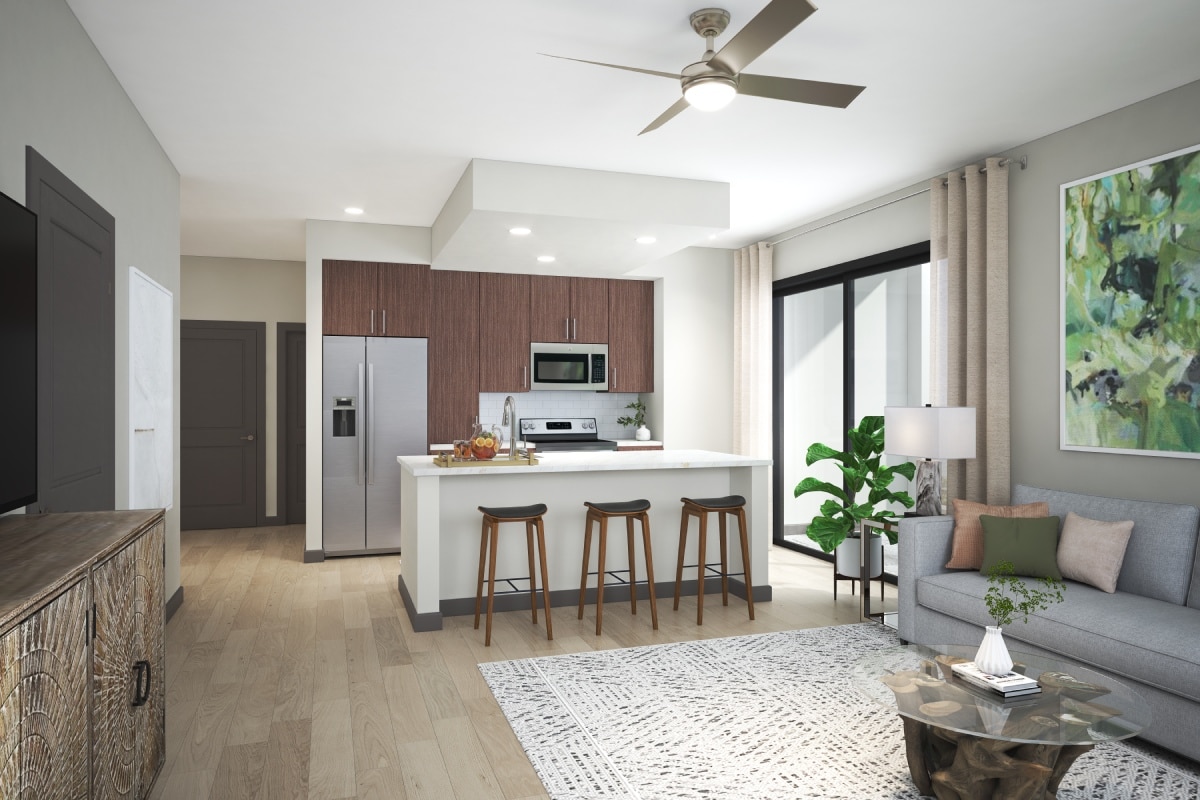
Location and community amenities factor into this in a way that often gets overlooked. At Sinclair at Palm Pointe, the coworking lounge, fitness center, pool, and outdoor social spaces effectively extend the functional square footage available to every resident. Someone in a studio who uses those shared spaces well might actually have access to more usable space in their day than a person in a one-bedroom elsewhere with nothing beyond their four walls. That’s worth factoring in honestly.
If you have the chance to tour both layouts before deciding, take it. Reading a floor plan and standing inside a space are different experiences. Some studios photograph beautifully and feel tight the moment you’re actually standing in them with your furniture in mind. Some one-bedrooms feel larger in person than their square footage suggests because of how light moves through the layout. You won’t know until you’re there.
The right size apartment isn’t the biggest one you can afford or the smallest one that technically fits your stuff. It’s the one that supports how you actually live, not the idealized version of how you imagine you might live once you have less clutter and more discipline. Get honest with yourself and the decision gets a lot easier.
Frequently Asked Questions
Is a studio apartment cheaper than a one-bedroom?
Almost always, yes. Studios typically run lower on monthly rent because they have less square footage, which makes them appealing for anyone prioritizing budget. That said, the gap can vary quite a bit depending on the community, the specific unit, and what’s included. Run the actual numbers on both options within the same community rather than assuming the difference is either negligible or huge before you check.
Is a one-bedroom better for working from home?
For most remote workers, yes. Having a separate bedroom means you can close a door, both literally during a call and mentally at the end of the day. The line between work time and personal time gets genuinely blurry when you’re doing both in one open room, and that blurriness tends to make you feel like you’re never fully in either mode. A community with a dedicated coworking lounge can help bridge that gap for studio renters, but a separate bedroom in your own unit is still a meaningful advantage.
Who should choose a studio apartment?
Someone who travels a lot, spends most of their time outside the apartment, owns relatively little, and doesn’t work from home regularly will probably feel right at home in a studio. It’s also a genuinely good choice for people who are intentional about keeping their living situation simple, not because they have to be but because that’s how they prefer to operate. Studios done well feel sleek and purposeful. Pay close attention to layout, natural light, and storage when you’re touring.
How do I decide which apartment layout is right for me?
Start with your actual habits rather than your aspirational ones. Think about how you currently use the space you live in, where you work, how you store things, and how often other people are in your home. Then tour both options in person if you can. Numbers and photos only go so far. Standing in a space with your real furniture mentally placed inside it tells you something a floor plan never quite can. Go with the layout that fits your life as it actually is.
Can shared community amenities make a smaller apartment feel like enough?
They genuinely can, and this is worth thinking about seriously rather than dismissing. In a community where the coworking lounge, fitness center, outdoor courtyards, and social spaces are all well-designed and easy to use, residents effectively have access to a much larger footprint than their individual unit suggests. A studio renter who works in the coworking lounge, exercises in the fitness center, and spends evenings in the outdoor spaces is living in a very different way than someone in a studio with nothing beyond their own four walls.